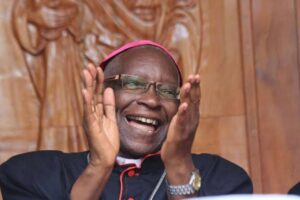
Gicinga Telling Nakuru's Story
Born in 1941 in Londiani, Bishop Peter Kairu’s appointment to the Catholic Diocese of Nakuru in 1997 marked a critical nexus in the history of Kenya’s Rift Valley. For over a decade, Nakuru stood as the epicentre of intense socio-political volatility, fractured by ethnopolitically motivated land clashes and state-sponsored repression. Amidst this turmoil, Kairu transformed the Nakuru diocese into a sanctuary for human rights and grassroots peacebuilding.
His tenure is defined by an unyielding stance against structural violence. Following the suspicious 2000 murder of Father John Kaiser, a fierce critic of government land-grabbing, Kairu fearlessly demanded state accountability, cementing the Church as the region’s moral vanguard. During the catastrophic 2007/2008 post-election violence, Nakuru faced unprecedented displacement and urban warfare. Kairu turned parish grounds into major internally displaced persons (IDP) camps, providing food, medical aid, and security to thousands.
Crucially, Kairu looked beyond immediate relief to pioneer local truth-and-reconciliation committees, bringing together warring community elders to address historical land grievances. By weaving spiritual leadership into civic defence, Kairu’s Nakuru years offer a profound historical blueprint of how religious institutions can actively mitigate state failure and heal deeply fractured multicultural landscapes.