People
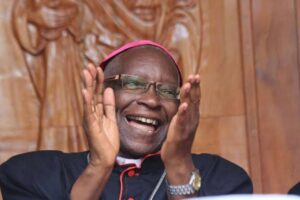
Archbishop Peter Kairu
Archbishop Peter Kairu is a Kenyan Catholic prelate whose leadership of the Catholic Diocese of Nakuru, beginning in 1997, coincided with one of the most challenging periods in the history of Kenya's Rift Valley. Serving during years marked by ethnic violence, land-related conflicts, and political unrest, he became widely recognised for promoting peace, defending human rights, and providing humanitarian assistance to communities affected by conflict. Under his leadership, Catholic parishes across Nakuru offered shelter, food, medical care, and support to thousands of internally displaced people, particularly during the 2007–2008 post-election violence. He also encouraged dialogue between communities and supported local peace and reconciliation initiatives aimed at addressing longstanding grievances. Through his commitment to justice, compassion, and reconciliation, Archbishop Kairu helped establish the Catholic Church as a significant force for peacebuilding and social cohesion in Nakuru and the wider Rift Valley.
Timeline
- 1941
Born on May 24, 1941, in Londiani, Kenya.
1970: Ordained as a priest on November 1, 1970, by the late Archbishop Ndingi Mwana’a Nzeki at St. Mary's Parish in Molo.
- 1983
Became the first Bishop of Murang'a (1983–1997) when he was appointed by Pope John Paul II as the inaugural bishop of the newly created Catholic Diocese of Murang'a.
- 1997
He was transferred to lead the Catholic Diocese of Nakuru (1997–2008).
- 2008
He was elevated to Metropolitan Archbishop of Nyeri (2008–2017) until he hit the canonical retirement age of 75.