Gicinga Telling Nakuru's Story

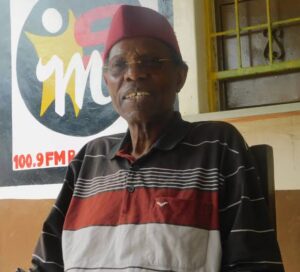
Koigi wa Wamwere is a Kenyan politician, author and human rights activist whose life and political career are closely connected to Nakuru. Born in Rugongo Forest in Dundori in 1949, he grew up in a forest community shaped by the colonial system and the Mau Mau struggle.

His experiences growing up in the forest, his education, and his encounters with injustice shaped his political outlook. After studying in Kenya and at Cornell University in the United States, he returned to Kenya in 1973, determined to campaign for greater democracy and social justice.

Koigi became a prominent opposition voice, serving as an MP for Nakuru North, later known as Subukia. His political activism led to repeated detention and periods of exile. He later returned to Parliament, continued his work as an author and broadcaster, and remained involved in public affairs.

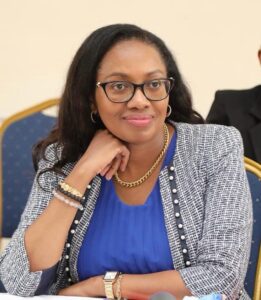
Susan Wakarura Kihika is a Kenyan lawyer and politician who became the third Governor of Nakuru County and the first woman to hold the office. She is among the most prominent political figures to emerge from Nakuru County and has served in several leadership positions at both county and national levels.

Since entering elective politics in 2013, Kihika has played a significant role in the development of devolved governance in Kenya and has become one of the most influential female political leaders in the Rift Valley region.

Early Life and Education

Susan Kihika was born in 1974 and is the daughter of the late Kihika Kimani, a veteran politician who served as Member of Parliament for Nakuru North and was one of Kenya’s most influential political figures during the post-independence era.

She received part of her education in Kenya before pursuing higher education in the United States. She studied law and was admitted to the Bar in the State of Texas, building a successful legal career before returning to active politics in Kenya.

Entry into Politics

Kihika entered elective politics during the 2013 General Election following the introduction of county governments under Kenya’s new Constitution.

She was elected as the first Speaker of the Nakuru County Assembly in 2013, becoming one of the earliest leaders to help shape county governance following devolution.

During her tenure, she oversaw the formative years of the County Assembly and played a key role in establishing legislative procedures and structures for Nakuru County.

Senator for Nakuru County

In the 2017 General Election, Susan Kihika was elected Senator for Nakuru County on a Jubilee Party ticket.

As a Senator, she represented Nakuru residents in the Kenyan Senate and participated in debates on devolution, county finances, legislation, and national governance. She also served in leadership roles within the Senate and became a prominent voice within the ruling political coalition.

Governor of Nakuru County

In the 2022 General Election, Susan Kihika was elected Governor of Nakuru County, succeeding Governor Lee Kinyanjui.

Her election was historic because she became the first woman to serve as Governor of Nakuru County since the creation of county governments in 2013.

As Governor, Kihika’s administration has focused on infrastructure development, healthcare services, water projects, agriculture, youth empowerment, and urban development. Her tenure has also seen renewed investment in sporting facilities, including the continued modernisation of Afraha Stadium and support for grassroots sports initiatives such as the Nakuru County Governor’s Cup.

Political Legacy

Susan Kihika’s political career reflects the growing participation of women in leadership positions in Kenya. As Speaker, Senator, and Governor, she has held three of the most significant political offices available within county and national governance structures.

Her rise to become Nakuru’s first female governor represents an important milestone in the political history of Nakuru County and serves as a notable example of women’s leadership in Kenyan politics.

Political Realignment and National Politics

Susan Kihika played a prominent role in the political realignments that followed the fallout between President Uhuru Kenyatta and Deputy President William Ruto during the latter years of the Jubilee administration.

In 2020, Kihika and Elgeyo Marakwet Senator Kipchumba Murkomen were removed from their leadership positions in the Senate as divisions within the ruling Jubilee Party deepened. Kihika lost her position as Senate Majority Whip, while Murkomen was removed as Senate Majority Leader. The changes were widely viewed as part of a broader purge of leaders perceived to be loyal to Deputy President Ruto.

Following the split within Jubilee, Kihika became one of the key political figures who joined Ruto’s political movement, which eventually culminated in the formation and growth of the United Democratic Alliance (UDA) Party. She emerged as one of the most visible UDA leaders in the Rift Valley and played an active role in mobilising support for the party ahead of the 2022 General Election.

One of the most dramatic moments of her political career occurred during the 2021 by-election campaigns in London Ward, Nakuru County, when police dispersed supporters and political leaders with tear gas during a tense campaign period. Kihika was among the leaders caught up in the confrontation, an incident that received national media attention and highlighted the intense political competition that characterised the period leading to the 2022 elections.

Personal Life

Susan Kihika is married to businessman Sam Mburu. The couple has been active in both business and public life and are among the most recognisable families in Nakuru County’s contemporary political landscape.

Notable Milestones

In 2025, Susan Kihika made national history by giving birth to twins while serving as the Governor of Nakuru County. The event attracted widespread public interest and discussion about women in leadership, work-life balance, and maternity in public office.

Her return to official duties after the birth was widely covered in the media and became a notable moment in the history of women’s political leadership in Kenya.

Significance to Nakuru History

Susan Kihika occupies a unique place in the history of Nakuru County as:

Her leadership forms part of the broader story of political development and democratic governance in Nakuru during the era of devolution.

Timeline

2013 – Elected first Speaker of the Nakuru County Assembly.
2017 – Elected Senator for Nakuru County.
2022 – Elected Governor of Nakuru County.
2025 – Oversaw the launch of Phase Two construction works at Afraha Stadium in partnership with the Kenya Defence Forces.
2026 – Launched the inaugural Nakuru County Governor’s Cup football tournament.

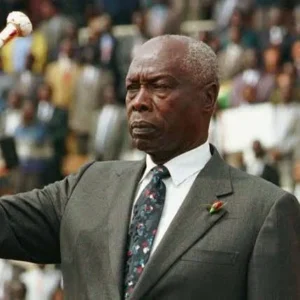
Daniel Toroitich arap Moi was born on 2 September 1924 in Sacho, Baringo County. He became Kenya’s second president in 1978, following the death of Jomo Kenyatta, and remained in office until 2002.

Although Moi was born in Baringo and spent much of his working life in Nairobi, Nakuru became closely associated with his life, politics and legacy. His home at Kabarak, about 20 kilometres from Nakuru City, became his best-known base outside Nairobi and, later, his retirement home.

For much of his presidency, State House Nakuru was also an important venue for his meetings with political leaders, community representatives, religious leaders and ordinary citizens. His regular presence in the region made Nakuru an important part of Kenya’s political landscape during the Moi era.

Education

Education was one of the most visible parts of Moi’s legacy in Nakuru.

At Kabarak, he established Moi High School – Kabarak, which developed into one of Kenya’s prominent secondary schools. He later established Kabarak University, a Christian university, in 2000. The university identifies Moi as its founder and first Chancellor.

Another important institution associated with his era is the Rift Valley Institute of Science and Technology, now known as the Rift Valley National Polytechnic, along the Nakuru–Njoro road. The institution became part of the region’s technical and vocational education landscape.

These institutions remain part of Nakuru’s educational story long after Moi’s presidency.

Mercy Njeri

One of the more personal stories associated with Moi in Nakuru concerns Mercy Njeri, a pupil at what was then Kiamunyi Primary School.

During a visit to the school in 1985, Moi was informed that the young girl needed urgent treatment for a serious heart condition. He helped finance her treatment in the United Kingdom. Mercy unfortunately died after undergoing surgery.

Following her death, the school was renamed Mercy Njeri Primary School. Her name later became associated with other places in the area, including Mercy Njeri Secondary School and Mercy Njeri Shopping Centre.

It is a small but significant story in Nakuru’s history: the name of a child who died young became part of the landscape of the community in which she lived.

Housing and the growth of Nakuru

Moi’s presidency also coincided with significant growth in Nakuru’s population and urban infrastructure. Moi Flats, among the city’s better-known residential developments, formed part of the wider expansion of urban housing during this period.

His influence was not limited to projects carrying his name. Government institutions, roads, housing and public services expanded as Nakuru grew into one of Kenya’s major urban centres.

Kabarak

Perhaps nowhere is Moi’s connection with Nakuru more visible than at Kabarak.

During his presidency, the estate was a private home as well as a place where Moi received visitors. After he left office in 2002, Kabarak became his permanent base.

Politicians continued to visit him there, as did religious leaders, community representatives and people seeking his advice. Over time, Kabarak became inseparable from the public image of Moi in retirement.

His family also maintained substantial agricultural interests in the region, further tying his personal life to Nakuru and the surrounding countryside.

A complicated legacy

Moi’s place in Nakuru’s history cannot be separated from the wider debate about his 24 years in power.

His supporters remember his emphasis on education, national unity, discipline and stability. His government introduced programmes such as the Nyayo milk scheme and oversaw major public investments during a period of rapid national growth.

His critics, however, point to authoritarian government, political repression, patronage and corruption during his presidency.

Both sides are part of the historical record. Gicinga should preserve that complexity rather than turn his story into either a tribute or a condemnation.

His final years

After retiring from the presidency in 2002, Moi continued to live at Kabarak. He remained a prominent figure in Kenyan public life and was frequently consulted by politicians and community leaders.

Moi died at The Nairobi Hospital on 4 February 2020, aged 95. He was later buried at his Kabarak home in Nakuru County with full military honours.

His death marked the end of a political career that had lasted more than five decades and closed one of the longest chapters in Kenya’s post-independence history.

SOURCES: