
Gicinga Telling Nakuru's Story

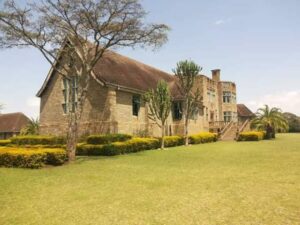
Egerton Castle is one of Nakuru County’s most remarkable yet least-known historic landmarks. Located near Njoro, approximately 14 kilometres southwest of Nakuru City, the castle was built by Lord Maurice Egerton, the 4th Baron Egerton, during the early twentieth century. Standing amid expansive farmland and overlooking the Rift Valley, the stately mansion remains a striking reminder of the colonial era and of the life of one of Kenya’s most influential agricultural pioneers.

Despite its name, Egerton Castle was never a royal residence or military fortress. Instead, it was conceived as a grand country home by Lord Egerton, who hoped to impress a woman he wished to marry. According to local tradition, the proposal was unsuccessful, and the castle was never occupied as originally intended. Over time, the building became one of Nakuru’s most enduring historical curiosities, attracting visitors interested in its unique story and architecture.

Historical Significance

The construction of Egerton Castle was part of Lord Egerton’s broader vision to develop agriculture in the Njoro area. After acquiring extensive tracts of land in the Rift Valley, he established successful farms and introduced modern farming techniques that influenced agricultural development throughout Kenya. His greatest legacy came in 1939, when he founded the Egerton Farm School, which later evolved into Egerton University, one of Africa’s leading agricultural universities.

The castle, therefore, represents more than an extravagant residence—it symbolises the ambitions, wealth, and agricultural transformation that characterised colonial settlement in the White Highlands during the early twentieth century.

Architecture

Built primarily of locally quarried stone, Egerton Castle reflects the influence of European country houses, featuring thick masonry walls, imposing towers, spacious halls, and large windows overlooking the surrounding countryside. The building’s elevated position provides sweeping views of the Njoro landscape and contributes to its distinctive appearance.

Although smaller than medieval European castles, its design remains unique within Kenya, making it one of the country’s few structures commonly referred to as a “castle.”

Tourism and Heritage

Today, Egerton Castle is a popular heritage attraction and is open to visitors interested in Nakuru’s colonial history. Guided tours explore the castle’s architecture, the life of Lord Maurice Egerton, and the development of farming and education in the region. The surrounding grounds also offer opportunities for photography, picnics, and educational visits.

For many visitors, the castle provides an opportunity to reflect on the complex legacy of colonial settlement, agricultural innovation, and the origins of one of Kenya’s oldest agricultural institutions.