Articles
History and Significance of Njoro County Aggregation and Industrial Park (CAIP)
The official handover of the County Aggregation and Industrial Park (CAIP) site at Ngongongeri Farm, Njoro, on 10 October 2023 marked the beginning of one of Nakuru County's most significant industrial development projects. As part of a national initiative to promote value addition, manufacturing, and job creation, the park is designed to process agricultural produce closer to where it is grown. Building on Njoro's rich agricultural heritage and its role as home to institutions such as Egerton University, the project represents a new phase in the area's evolution—from farming and research to agro-industrialisation. Despite implementation challenges and delays, the industrial park is expected to strengthen local industries, create employment, attract investment, and position Nakuru as a leading centre for agro-processing in Kenya.
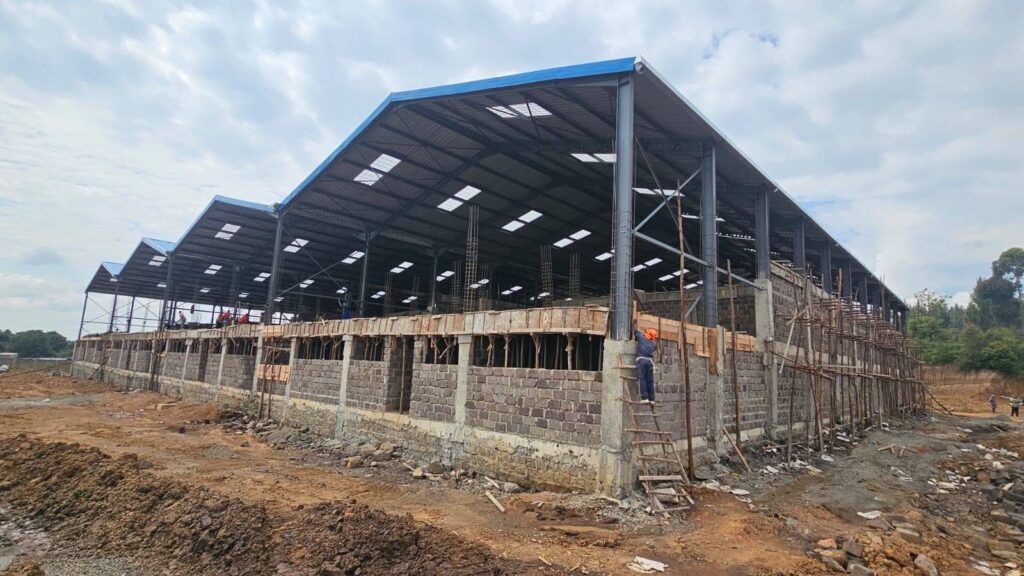
On 10 October 2023, Nakuru County took a step toward transforming its agricultural economy when officials formally handed over the site for the construction of the County Aggregation and Industrial Park (CAIP) at Ngongongeri Farm in Njoro. The event marked the official commencement of one of the most ambitious industrial development projects in the county’s history and signalled a new chapter in the economic evolution of Njoro, an area long associated with agriculture, education, and research.
The County Aggregation and Industrial Park initiative is a national government programme being implemented in partnership with county governments across Kenya. The programme aims to promote industrialisation, value addition, job creation, and export-orientated manufacturing by establishing modern industrial parks strategically located near major agricultural production zones.
For Nakuru County, Njoro was a natural choice.
Why Njoro was picked for the CAIP Project
Located approximately 20 kilometres southwest of Nakuru City, the area has played a central role in Kenya’s agricultural development for more than a century.
Before colonial settlement, the region was inhabited by Maasai communities who grazed livestock across the fertile grasslands surrounding the Mau Escarpment. During the colonial period, European settlers recognised the area’s agricultural potential and established large-scale farms dedicated to wheat, barley, dairy farming, and livestock production.
The area’s transformation accelerated with the arrival of Lord Maurice Egerton, whose agricultural experiments and educational initiatives led to the establishment of Egerton Farm School in 1939. That institution would eventually grow into Egerton University, one of Africa’s leading agricultural universities.
By the early twenty-first century, Njoro had become synonymous with agricultural innovation. The area hosted major research institutions, commercial farms, seed companies, dairy enterprises, and training facilities serving farmers from across Kenya and East Africa.
The decision to locate the County Aggregation and Industrial Park at Ngongongeri Farm therefore represented a continuation of Njoro’s long-standing role as a centre of agricultural excellence.
The Vision Behind the Project
The County Aggregation and Industrial Park programme was conceived as part of Kenya’s efforts to increase value addition within the agricultural sector.
For decades, many Kenyan farmers sold raw produce with little or no processing. Wheat was transported elsewhere for milling. Potatoes left farms without value addition. Milk was often sold in raw form. This meant that significant economic value was created outside farming communities.
The CAIP model seeks to reverse that trend.
Instead of exporting raw products, counties are encouraged to process, package, manufacture, and market goods closer to where they are produced. This approach creates employment opportunities, stimulates local economies, increases farmers’ incomes, and enhances industrial growth.
The Njoro facility was envisioned as a hub where agricultural products from Nakuru and neighbouring counties could be aggregated, processed, and prepared for local and international markets.
The Site Handover
The official handover ceremony on 10 October 2023 brought together county officials, contractors, engineers, and project stakeholders.
The event marked the formal transfer of the construction site to the contractor responsible for developing the industrial park. With the handover completed, preliminary construction activities commenced immediately.
Initial works included:
- Site clearing.
- Installation of perimeter fencing.
- Construction of site offices.
- Drainage improvements.
- Provision of water infrastructure.
- Electricity connections.
- Ground preparation.
County officials described the project as a potential game-changer for Nakuru’s economy.
The industrial park was expected to attract investors, create jobs, strengthen manufacturing, and provide new opportunities for local farmers and entrepreneurs.
A Historic Continuation of Njoro’s Agricultural Legacy
The significance of the project becomes clearer when viewed within the broader history of Njoro.
Over the past century, the area has witnessed several major economic transitions.
The first was the establishment of large-scale commercial agriculture during the colonial period.
The second was the emergence of agricultural education through institutions such as Egerton Farm School and later Egerton University.
The third was the growth of scientific agricultural research through government agencies and private enterprises.
The County Aggregation and Industrial Park represents a fourth phase in this evolution: agro-industrialisation.
Rather than focusing solely on production, the new phase emphasises manufacturing, processing, packaging, and market development.
In this sense, the industrial park can be seen as a natural extension of the agricultural traditions that have defined Njoro for generations.
Economic Expectations
The project was expected to generate both direct and indirect economic benefits.
Direct benefits included the following:
- Employment during construction.
- Permanent industrial jobs.
- Opportunities for technicians and engineers.
- Administrative and support services.
Indirect benefits included the following:
- Increased demand for agricultural produce.
- Expanded transport and logistics services.
- Growth of local businesses.
- Development of housing and commercial facilities.
County leaders expressed hope that the industrial park would encourage young people to pursue careers in manufacturing and agribusiness while reducing reliance on traditional forms of employment.
Challenges and Delays
Like many large infrastructure projects, the development faced challenges after construction began.
Funding constraints, administrative procedures, and implementation delays slowed progress at times during 2024. Despite these setbacks, county and national government officials reaffirmed their commitment to completing the project.
Construction later resumed, and efforts continued to attract investors interested in establishing operations within the park.
These challenges highlighted the complexity of implementing large-scale industrial projects but also demonstrated stakeholders’ determination to ensure the project’s success.
The Broader National Context
The Njoro County Aggregation and Industrial Park forms part of a wider national strategy aimed at strengthening Kenya’s manufacturing sector.
Across the country, counties have sought to identify industries that build upon local strengths.
For Nakuru, agriculture remains the obvious foundation.
The county is one of Kenya’s leading producers of the following:
- Wheat.
- Barley.
- Potatoes.
- Dairy products.
- Horticultural crops.
- Livestock products.
An industrial park located near these production zones provides opportunities for processing and value addition that would otherwise occur elsewhere.
Looking to the Future
Although construction was still ongoing in the years following the site handover, the significance of 10 October 2023 remains clear.
Future historians may view the date as the moment when Njoro formally entered a new era of industrial development.
Just as the arrival of the railway transformed Nakuru in the early twentieth century and the establishment of Egerton Farm School transformed agricultural education in the mid-twentieth century, the County Aggregation and Industrial Park has the potential to reshape the economic landscape of Njoro and Nakuru County.
Whether measured in jobs created, industries established, or markets expanded, the project represents an ambitious attempt to connect agriculture with manufacturing and position Nakuru as one of Kenya’s leading centres of agro-industrial innovation.
The handing over of the Ngongongeri Farm site on 10 October 2023, therefore, stands as an important milestone in the continuing story of Njoro—a story that stretches from pastoral landscapes and colonial farms to universities, research centres, and now a modern industrial park designed to drive the next phase of economic growth.